
From Binder to Final Roll
How a Chip-Seal Road Comes Together
Chip seal is a moving operation. The road is prepared, the binder or emulsion goes down, aggregate follows close behind, and rollers seat the stone. Each pass sets up the next one.
Sequence at a glance
Each decision prepares the next step
Read the Road
Make sure the route is ready for a new surface
The crew looks for soft material, deep ruts, broken edges, standing water, and other trouble that would work against the application. A firm, clean, properly shaped road is the goal.
Prepare the Route
Repair, shape, compact, and clean
Failed areas are corrected and the road is brought into a consistent shape. Loose debris and contamination are cleared so the binder can meet the surface evenly.
A surface built over prepared granular material may include a specified prime or other interface treatment before chip-seal application.
Preparing an existing roadStage the Materials
Binder, aggregate, equipment, and weather need to line up
The selected binder or emulsion and aggregate must work together, and the trucks need to be ready to keep the operation moving. Clean material and steady coverage are essential.
Make the Paving Run
Apply the binder and cover it promptly
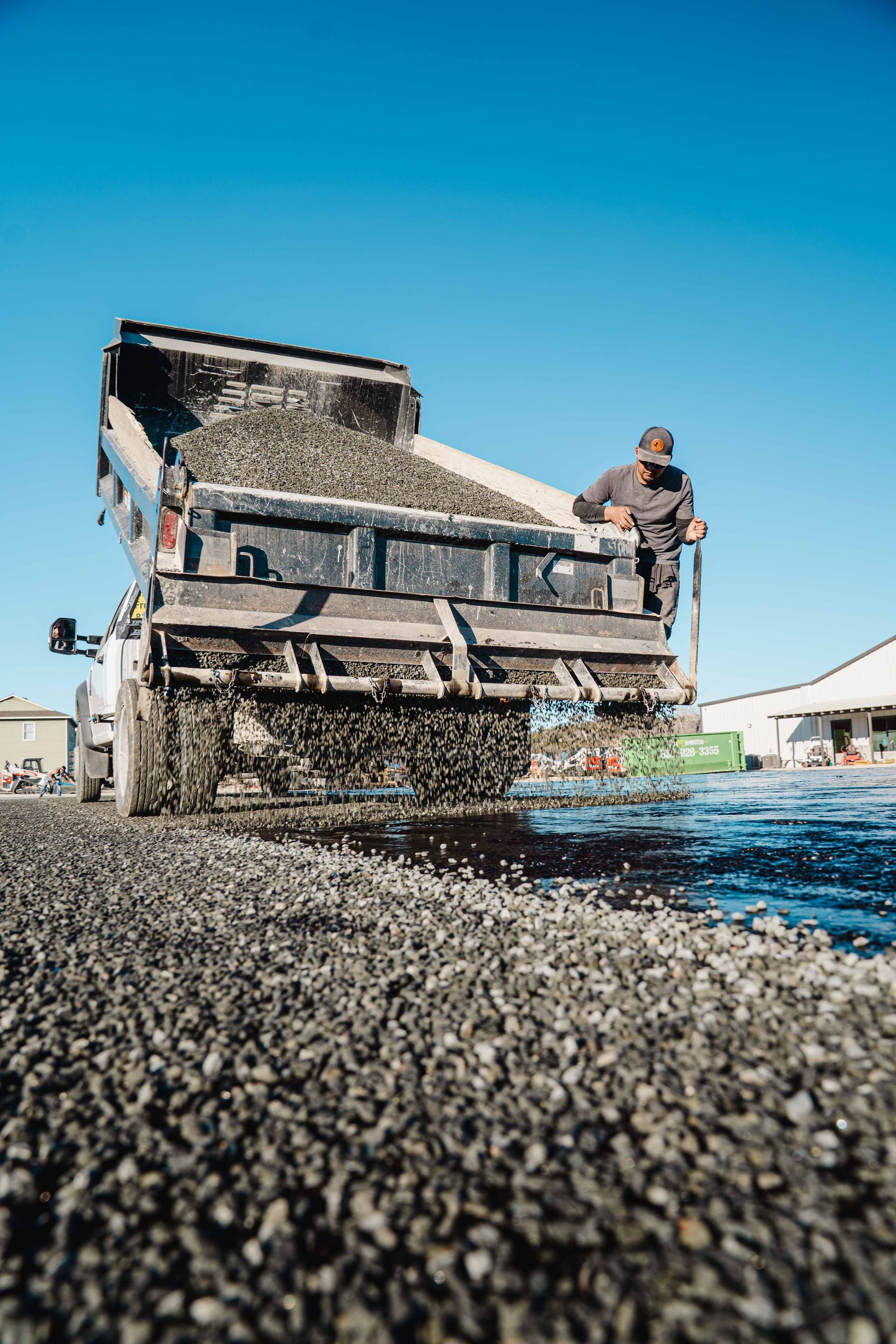
Binder or emulsion is distributed across the prepared area. Aggregate follows while conditions are right, with attention to overlaps, starts, stops, curves, edges, and transitions.
Seat the Stone
Roll thoroughly, then sweep the excess
Rollers press the aggregate into the binder across the road. Loose stone that does not embed is cleared through sweeping and cleanup as the surface settles in.
Open the Road
Give the owner clear instructions for the first drive
Weather, materials, rolling, and cleanup all affect early use. Rafferty Paving explains when vehicles can return and what to expect from the new aggregate surface.
Ready to See It on Your Road?
Start with the route you have now
Show us the route you have and the places that need attention.